

In 1986, THE TRANSFORMERS: THE MOVIE rolled into cinemas and changed the franchise forever. Unicron arrives as a planet-sized threat to the universe, heroes rise, legends are forged and an entire generation of kids were changed forever by THAT moment, which still hits like a truck. Featuring an iconic voice cast, unforgettable animation and a soundtrack that hadabsolutely no business going that hard, the film remains one of the boldest animated classics of its era. Now, forty years later, it returns to the big screen in 4K for a special anniversary celebration of the battle, the music and the legacy. Stay through the credits...because as this journey ends, a new one begins.
Features 10-15 mins of never-before-seen exclusive content!
-
Sold Out
3:10 pm
4K
-
Book
3:45 pm
4K
-
Book
6:00 pm
4K
-
Book
3:35 pm
4K
-
Book
12:15 pm
-
Book
12:00 pm
4K

In an underwater city, a young girl takes care of a large egg she holds carefully in her arms. A boy with a gun arrives in search of a bird he saw in his dream. At first, it seems as if feelings of sympathy are developing between the two.
Forty years after the film’s original release, Anime Limited is proud to present an all-new 4K restoration of the film, supervised by director Mamoru Oshii, in cinemas nationwide for the very first time.
The film is a creative collaboration between acclaimed director Mamoru Oshii (Ghost in the Shell), who wrote and directed the feature, and revered artist Yoshitaka Amano (Final Fantasy, Vampire Hunter D). The film beautifully intertwines Oshii’s thematic reflections on philosophy and theology with Amano’s distinctive ink painting style, culminating in an arrestingly beautiful hand-drawn allegorical fantasy.
-
Book
6:15 pm
4KSUB
-
Book
12:00 pm
4KSUB
-
Book
5:25 pm
4KSUB
-
Book
12:00 pm
4KSUB
-
Book
3:30 pm
4KSUB
-
Book
11:15 am
4KSUB
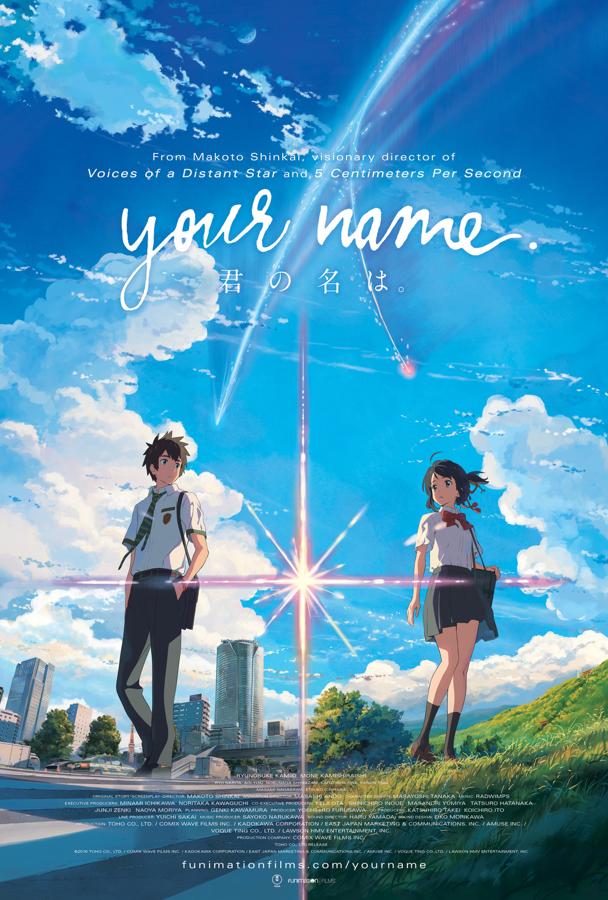
Two teenagers share a profound, magical connection upon discovering they are swapping bodies. Things manage to become even more complicated when the boy and girl decide to meet in person.
-
Book
2:45 pm
SUB
-
Book
3:10 pm
SUB
-
Book
6:00 pm
SUB
-
Book
3:30 pm
SUB
-
Book
12:00 pm
SUB
-
Book
5:45 pm
SUB

Iconic and game-changing, AKIRA is the definitive anime masterpiece! Katsuhiro Otomo's landmark cyberpunk classic obliterated the boundaries of Japanese animation and forced the world to look into the future. AKIRA's arrival shattered traditional thinking, creating space for future generations of ground-breaking movies.
July, 1988 - World War III breaks loose. Then, in 2019, in megalopolis Tokyo...As the leader of a group of young robust delinquents, Kaneda spent his nights tearing through the urban wastes, racing his motorbike against rival groups. One night while riding with his gang, his friend Tetsuo suddenly encounters a strange boy - the product of human experimentation and is injured in the ensuing crash. Shortly thereafter, a military squadron appears on the scene to take the boy and Tetsuo away to an army research facility. Determined to free Tetsuo from capture, Kaneda sneaks into the army research lab. However, a regimen of extreme experimental procedures has awakened a new power in his friend, and now he is consumed by madness..
-
Book
3:00 pm
35mmSUB
-
Book
5:00 pm
35mmSUB
-
Book
8:35 pm
35mmSUB
-
Book
2:45 pm
35mmSUB
-
Book
8:45 pm
35mmSUB
-
Book
2:35 pm
35mmSUB
-
Book
3:10 pm
35mmSUB
-
Book
8:45 pm
35mmSUB
-
Book
11:15 am
4KSUB

Celebrate this beloved coming-of-age story from the legendary Studio Ghibli, creators of Spirited Away, and Academy Award®-winning director Hayao Miyazaki, about a resourceful young witch who uses her broom to create a delivery service, only to lose her gift of flight in a moment of self-doubt. It is a tradition for all young witches to leave their families on the night of a full moon and fly off into the wide world to learn their craft. When that night comes for Kiki, she embarks on her new journey with her sarcastic black cat, Jiji, landing the next morning in a seaside town, where her unique skills make her an instant sensation.
-
Sold Out
12:00 pm
SUB

In the 17th century, two Portuguese Jesuit priests travel to Japan in an attempt to locate their mentor, who is rumoured to have committed apostasy, and to propagate Catholicism.
-
Book
8:15 pm

For kids around the world, music is often the only salvation when the pain and anxiety of teenage life becomes too much to bear. Yuichi (Hayato Ichihara) is in the 8th grade and he worships Lily Chou-Chou, a Bjork-like chanteuse whose epic music is lush and transcendent. Yuichi only lives for Lily Chou-Chou's big Tokyo concert, where the lies and violence can be washed away by the presence of his goddess and her powerful music. But fate has yet another obstacle in store for Lily's devoted fan.
-
Book
8:35 pm

Godzilla is the roaring granddaddy of all monster movies. It’s also a remarkably humane and melancholy drama, made in Japan at a time when the country was reeling from nuclear attack and H-bomb testing in the Pacific. Its rampaging radioactive beast, the poignant embodiment of an entire population’s fears, became a beloved international icon of destruction, spawning almost thirty sequels.
-
Book
12:00 pm
35mm
-
Book
12:00 pm
35mm

Filmmaker Genya Tachibana begins work on a documentary about famed Japanese actress Chiyoko Fujiwara. Now well into old age, Chiyoko has become reclusive and shy about any publicity, but she eventually warms up to Tachibana and starts to relate her life story. As the decades pass, Chiyoko is transformed from a teen with big dreams into a full-blown celebrity, while her cinematic characters span various eras, from ancient Japan to the distant future.
-
Book
11:50 am
4KSUB

The tale of an eccentric band of culinary ronin who guide the widow of a noodle-shop owner on her quest for the perfect recipe, this rapturous “ramen western” by Japanese director Juzo Itami is an entertaining, genre-bending adventure underpinned by a deft satire of the way social conventions distort the most natural of human urges—our appetites. Interspersing the efforts of Tampopo (Nobuko Miyamoto) and friends to make her café a success with the erotic exploits of a gastronome gangster and glimpses of food culture both high and low, the sweet, sexy, and surreal Tampopo is a lavishly inclusive paean to the sensual joys of nourishment, and one of the most mouthwatering examples of food on film ever made.
-
Book
12:15 pm

A young Japanese singer is encouraged by her agent to quit singing and pursue an acting career, beginning with a role in a murder mystery TV show.
-
Book
12:30 pm
4KSUB
-
Book
8:45 pm
SUB
-
Book
12:00 pm
4KSUB
-
Book
3:30 pm
4KSUB
-
Book
5:30 pm
4KSUB
-
Book
6:00 pm
4KSUB
-
Book
10:00 am
4KSUB
-
Book
6:05 pm
SUB

Tickets Are Only Available via BFI London Film Festival Website from Tuesday 17 September 2026 10:00am: Click Here To Book
The sequel to Takashi Yamazaki’s acclaimed 2023 film is a true cinematic spectacle that’s sure to grip fans of Godzilla, as well as newcomers to the franchise.
Japan, 1949. Pilot Kōichi, his wife Noriko and adoptive daughter Akiko are attempting from recover from Godzilla’s recent attacks. But just as everything seems settled, a new danger emerges. Meanwhile, at the bottom of the sea, something is stirring. The first Japanese film to be shot for IMAX, Godzilla Minus Zero combines high-octane thrills with more than a little heart.
Japanese Language with English subtitles
-
Book
5:30 pm

Legendary comedian and TV host turned director Takeshi Kitano writes, directs, and stars in his first and only American co-production. Disgraced yakuza Yamamoto (Kitano) seeks refuge in Los Angeles, reconnecting with his younger half-brother Ken (Claude Maki) after his clan suffered defeat at the hands of a rival gang back in Tokyo. Cool and detached, Brother marries Japanese and American disillusionment in Kitano’s signature violent minimalist style through the growing bonds between Yamamoto and the multinational gang that he cultivates in L.A.
Brother is featured as part of Gangsters Have Feelings Too, a season exploring the sensitive gangster film. The season is presented with the National Film and Television School’s Film Studies, Programming and Curation MA.
-
Book
6:15 pm
35mmIntro

Still censored in its own country, In the Realm of the Senses (Ai no corrida), by Japanese director Nagisa Oshima, remains one of the most controversial films of all time. A graphic portrayal of insatiable sexual desire, Oshima’s film, set in 1936 and based on a true incident, depicts a man and a woman (Tatsuya Fuji and Eiko Matsuda) consumed by a transcendent, destructive love while living in an era of ever-escalating imperialism and governmental control. Less a work of pornography than of politics, In the Realm of the Senses is a brave, taboo-breaking milestone.
Content Warning: This film contains scenes of graphic sex and violence. Further information about content and age-appropriateness for specific films can be found on Common Sense Media, IMDb and DoesTheDogDie.com, as well as through general internet searches.
-
Book
3:25 pm
-
Book
6:15 pm

Discover the brilliance of this heartwarming coming-of-age classic from the legendary Studio Ghibli, creators of My Neighbour Totoro and the Academy Award®-winning Spirited Away.
A chance encounter with a mysterious cat sends Shizuku, a girl with her head in the clouds, on a quest for her true talent. Together with Seiji, a boy determined to follow his dreams, and enchanted by The Baron, an antique cat figurine who guides her to listen to the whispers of her heart, Shizuku embarks on a life-changing adventure that takes her beyond the boundaries of her imagination. Based on a screenplay and storyboards from Hayao Miyazaki, WHISPER OF THE HEART is a precious gem in the Studio Ghibli catalogue, directed by veteran animator Yoshifumi Kondo.
-
Book
12:00 pm
4KSUB
-
Book
3:05 pm
4KSUB

EVANGELION: DEATH (TRUE)²: A recap of the first 24 episodes of Neon Genesis Evangelion. Fifteen years after the Second Impact, apathetic teen Shinji joins his father's group NERV to fight the Angels. But the truth may destroy them all.
THE END OF EVANGELION: Concurrent theatrical ending of the TV series Neon Genesis Evangelion (1995). Seele orders an all-out attack on NERV, aiming to destroy the Evas before Gendo can trigger Third Impact and Instrumentality under his control.
-
Book
8:30 pm
SUB

With an arresting mix of eroticism and horror, Oshima plunges the viewer into a nightmarish tale of guilt and retribution in Empire of Passion (Ai no borei). Set in a Japanese village at the end of the nineteenth century, the film details the emotional and physical downfall of a married woman and her younger lover following their decision to murder her husband and dump his body in a well. Empire of Passion was Oshima's only true kaidan (Japanese ghost story), and the film, a savage, unrelenting experience, earned him the best director award at the Cannes Film Festival.
-
Book
2:35 pm
-
Book
6:15 pm

From the creators of Spirited Away and Ponyo, and Academy Award®-nominated director Hiromasa Yonebayashi, comes a gorgeous and adventure-filled adaptation of The Borrowers, one of the most beloved children’s books of all time.
In a secret world hidden beneath the floorboards, tiny people called Borrowers live out of sight of humans. But when brave Arrietty is out gathering supplies, she is discovered by Shawn, a human boy, and they begin to form a friendship that blossoms into a heartwarming adventure.
-
Book
12:35 pm
4KSUB
-
Book
3:30 pm
4KSUB

A detective starts spiraling out of control when a wave of gruesome murders with seemingly similar bizarre circumstances are sweeping Tokyo.
-
Book
5:30 pm

Mr. Watanabe suddenly finds that he has terminal cancer. He vows to make his final days meaningful. His attempts to communicate his anguish to his son and daughter-in-law lead only to heartbreak. Finally, inspired by an unselfish co-worker, he turns his efforts to bringing happiness to others by building a playground in a dreary slum neighborhood. When the park is finally completed, he is able to face death with peaceful acceptance.
-
Book
2:30 pm
35mm

Hirayama is content with his life as a toilet cleaner in Tokyo. Outside of his structured routine, he cherishes music on cassette tapes, books, and taking photos of trees. Through unexpected encounters, he reflects on finding beauty in the world.
-
Book
12:15 pm

Set in a POW camp in Japanese-occupied Java circa 1942, the film explores the relationship between British prisoners and their captors. Lt. Col. John Lawrence (Tom Conti), the lone Japanese speaker among the interned British, tries to negotiate an uneasy equilibrium within the camp, which is overseen by the vicious Capt. Yanoi (Ryuichi Sakamoto). An ardent follower of the Bushido moral code, his eye is unexpectedly caught by the arrival Maj. Jack “Strafer” Celliers (David Bowie), an insolent and rabble-rousing new prisoner. Could Yanoi’s fascination with Celliers change everything? Merry Christmas, Mr. Lawrence has endured as a deeply moving anti-war statement, as well as a thoughtful exploration of national and sexual identity.
-
Book
6:00 pm

Middle-aged alcoholic Gin, teenage runaway Miyuki and former drag queen Hana are a trio of homeless people surviving as a makeshift family on the streets of Tokyo. While rummaging in the trash for food on Christmas Eve, they stumble upon an abandoned newborn baby in a trash bin. With only a handful of clues to the baby's identity, the three misfits search the streets of Tokyo for help in returning the baby to its parents.
-
Book
12:00 pm
SUB
-
Book
3:15 pm
SUB
-
Book
12:30 pm
SUB
-
Book
6:20 pm
SUB

In this Japanese animation, cyborg federal agent Maj. Motoko Kusanagi (Mimi Woods) trails "The Puppet Master" (Abe Lasser), who illegally hacks into the computerized minds of cyborg-human hybrids. Her pursuit of a man who can modify the identity of strangers leaves Motoko pondering her own makeup and what life might be like if she had more human traits. With her partner (Richard George), she corners the hacker, but her curiosity about her identity sends the case in an unforeseen direction.
-
Book
12:00 pm
4KSUB

Set in feudal Japan, this film presents an intriguing tale of violent crime in the woods, told from the perspective of four different characters -- a bandit, a woman, her husband and a woodcutter. Only two things about the incident seem to be clear -- the woman was raped and her husband is now dead. However, the other elements radically differ as the four participants and/or witnesses relate their own stories (with the dead man, eerily enough, speaking through a medium). As each account is revealed, what seemed black-and-white turns to various hues of gray, leading to surprising -- and confounding -- revelations.
-
Book
11:45 am