








Suzy (Jessica Harper) travels to Germany to attend ballet school. When she arrives, late on a stormy night, no one lets her in, and she sees Pat (Eva Axén), another student, fleeing from the school. When Pat reaches her apartment, she is murdered. The next day, Suzy is admitted to her new school, but has a difficult time settling in. She hears noises, and often feels ill. As more people die, Suzy uncovers the terrifying secret history of the place.

In 1962 Hong Kong, neighbors Su Li-zhen (Mrs. Chan) and Chow Mo-wan (Mr. Chow) discover their spouses are having an affair. As they spend time together, they develop feelings for each other, but their relationship remains chaste and unspoken, reflecting societal constraints and their own moral compass.
-
Book
12:45 pm
35mm

Jack Torrance (Jack Nicholson) becomes winter caretaker at the isolated Overlook Hotel in Colorado, hoping to cure his writer's block. He settles in along with his wife, Wendy (Shelley Duvall), and his son, Danny (Danny Lloyd), who is plagued by psychic premonitions. As Jack's writing goes nowhere and Danny's visions become more disturbing, Jack discovers the hotel's dark secrets and begins to unravel into a homicidal maniac hell-bent on terrorizing his family.
-
Book
3:00 pm
35mm

When their plan to book a show at the Rivoli goes horribly wrong, Matt and Jay accidentally travel back to the year 2008.
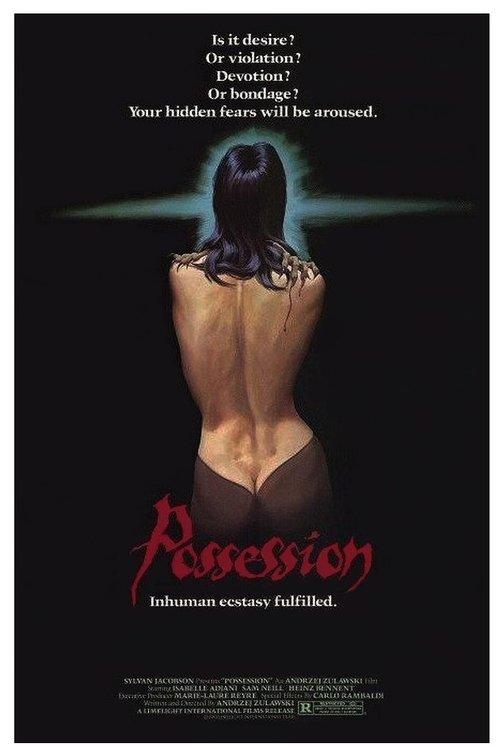
After Anna (Isabelle Adjani) reveals to her husband, Mark (Sam Neill), that she is having an affair, she leaves him and their son. Mark is devastated, and seeks out Heinrich (Heinz Bennent), the man who cuckolded him, only to receive a beating. After a series of violent confrontations between Mark and Anna, Mark hires a private investigator to follow her. Anna descends into madness, and it's soon clear that she is hiding a much bigger secret -- one that is both inexplicable and shocking.
-
Book
6:00 pm
4K

Legendary comedian and TV host turned director Takeshi Kitano writes, directs, and stars in his first and only American co-production. Disgraced yakuza Yamamoto (Kitano) seeks refuge in Los Angeles, reconnecting with his younger half-brother Ken (Claude Maki) after his clan suffered defeat at the hands of a rival gang back in Tokyo. Cool and detached, Brother marries Japanese and American disillusionment in Kitano’s signature violent minimalist style through the growing bonds between Yamamoto and the multinational gang that he cultivates in L.A.
Brother is featured as part of Gangsters Have Feelings Too, a season exploring the sensitive gangster film. The season is presented with the National Film and Television School’s Film Studies, Programming and Curation MA.
-
Sold out
6:15 pm
35mmIntro

One of the most profitable horror movies ever made, this tale of an exorcism is based loosely on actual events. When young Regan (Linda Blair) starts acting odd -- levitating, speaking in tongues -- her worried mother (Ellen Burstyn) seeks medical help, only to hit a dead end. A local priest (Jason Miller), however, thinks the girl may be seized by the devil. The priest makes a request to perform an exorcism, and the church sends in an expert (Max von Sydow) to help with the difficult job.
-
Book
8:45 pm
35mm
HorrOctober invades our Mystery Movie strand this October! We'll be serving up four Mystery Horror Movies over four weeks! That is the only hint we will give you! No other hints. No clues. No refunds!
You can find a list of every MYSTERY MOVIE we have ever screened HERE; if a film is on this list, it is not eligible for future Mystery Movie screenings!
---
Content Advice : As these films are a mystery, we aren't able to provide specific ratings / guidance on the film's content. We strongly advise that you take this into consideration before purchasing a ticket.